%2Ffit-in%2F250x250%2Fusers%2F07790dff-4fa1-43da-bee2-288bda18ca2c%2Fimages%2Fab63a06c-a399-4e7d-9424-6a11e257de70.jpg&w=1920&q=100)
/users/07790dff-4fa1-43da-bee2-288bda18ca2c/ratecard/image-2025-04-11t170353.101.png)
%2F300x300%2Fusers%2F07790dff-4fa1-43da-bee2-288bda18ca2c%2Fratecard%2Fimage-2025-04-11t170353.101.png&w=256&q=75)
%2F300x300%2Fusers%2F07790dff-4fa1-43da-bee2-288bda18ca2c%2Fimages%2Fdanford-st-fishing-trip-2639.png&w=256&q=75)
%2F300x300%2Fusers%2F07790dff-4fa1-43da-bee2-288bda18ca2c%2Fimages%2Fflorida-fishing-adventure-2600.png&w=256&q=75)
%2F300x300%2Fusers%2F07790dff-4fa1-43da-bee2-288bda18ca2c%2Fimages%2Fanglers-fishing-danford-st-2632.png&w=256&q=75)
%2F300x300%2Fusers%2F07790dff-4fa1-43da-bee2-288bda18ca2c%2Fimages%2Fgreat-fishing-adventure-florida-2719.png&w=256&q=75)
%2F300x300%2Fusers%2F07790dff-4fa1-43da-bee2-288bda18ca2c%2Fimages%2Ftrio-anglers-catch-danford-st-2701.png&w=256&q=75)
%2F300x300%2Fusers%2F07790dff-4fa1-43da-bee2-288bda18ca2c%2Fimages%2Ffishing-buddies-haul-bites-2652.png&w=256&q=75)
%2F300x300%2Fusers%2F07790dff-4fa1-43da-bee2-288bda18ca2c%2Fimages%2Fbountiful-fishing-excursions-2861.png&w=256&q=75)
%2F300x300%2Fusers%2F07790dff-4fa1-43da-bee2-288bda18ca2c%2Fimages%2Fbountiful-fishing-haul-florida-2996.png&w=256&q=75)
%2F300x300%2Fusers%2F07790dff-4fa1-43da-bee2-288bda18ca2c%2Fimages%2Fangler-catch-florida-2546.png&w=256&q=75)
%2F300x300%2Fusers%2F07790dff-4fa1-43da-bee2-288bda18ca2c%2Fimages%2Ffishing-danford-st-2602.png&w=256&q=75)
Expert-Guided 8-Hour Naples Offshore Charter
 Naples
What you will be catching:
 Gag Grouper
 Goliath Grouper
 Great Barracuda
 Red Grouper
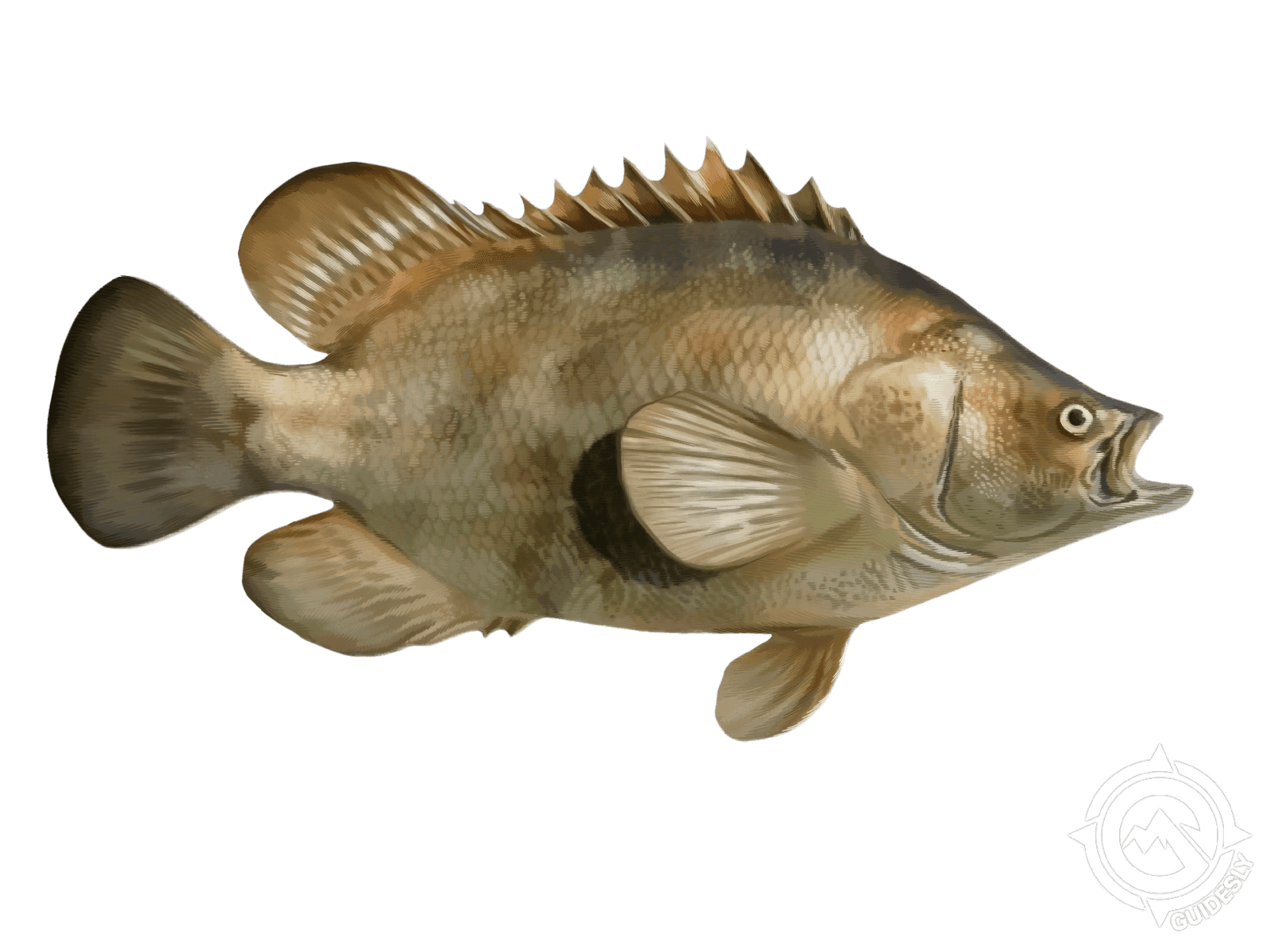
 Tripletail
- 8-hour offshore fishing adventure targeting premium species aboard Mako vessel
- Expert Captain Joseph Fuentes provides professional guidance and quality equipment
- Accommodates up to 6 guests departing from Always Reel Fishing in Naples
Trip Pricing and Availabilities:
Full Day Offshore Adventure in Naples, FL
Ready to get your line wet and reel in some serious fish? Captain Joseph Fuentes is your go-to guy for an action-packed day on the waters off Naples, Florida. We're talking 8 full hours of chasing after some of the Gulf's most sought-after species. Whether you're a seasoned angler or just getting your sea legs, this trip is set up to give you a shot at landing the big one.
What's On The Menu Today?
Hop aboard our Mako center console and we'll point the bow towards prime fishing grounds. We're after the heavy hitters out here - Gag Grouper, Goliath Grouper, Red Grouper, Barracuda, and Tripletail. These aren't your average backyard pond fish, folks. We're talking about bruisers that'll test your drag and make your arms burn (in the best way possible). The boat's got room for up to 6 of your crew, so bring your buddies or make it a family day out. Don't sweat the gear - we've got top-notch equipment that'll give you the edge in the fight.
How We'll Get 'Em
Offshore fishing is a whole different ballgame from casting off the pier. We'll be using a mix of techniques to target our fish. For the grouper, we're talking about dropping bait to the bottom where these boys like to hang out. It's all about feeling that thump and setting the hook hard. Barracuda? We might troll with some flashy lures to get their attention. And for those Tripletail, keep your eyes peeled - they love to float near the surface by debris or buoys. We'll adjust our strategy based on what's biting and where they're hiding. Captain Joseph's got years of experience reading these waters, so trust me, we'll put you on the fish.
Top Catches This Season
The regulars who've been out with us can't stop talking about the monster Goliath Grouper they've been tangling with. These beasts can push 400 pounds, and when they decide to take your bait, hold on tight! We've also been seeing some nice-sized Gags in the 20-30 pound range. The 'cudas have been putting on a show too, with their acrobatic jumps and lightning-fast runs. And let's not forget about those crafty Tripletail - they might not be the biggest, but pound for pound, they're some of the tastiest fish in these waters.
Species You'll Want to Hook
Gag Grouper: These guys are the bread and butter of Gulf bottom fishing. They love to hang around rocky areas and reefs, and they hit hard. Best time to target them is fall through winter when the water cools down a bit. Gags can grow over 50 pounds, and they're known for that classic grouper taste that'll have you coming back for seconds.
Goliath Grouper: The gentle giants of the Gulf. These massive fish can grow to the size of a small car, no joke. They're catch-and-release only, but the thrill of hooking one is unmatched. They hang around wrecks and reefs, and when they take your bait, it's like hooking a Volkswagen. Peak season is late summer through fall.
Red Grouper: Smaller than their Gag cousins but just as feisty. Red Grouper are year-round targets, but they really turn on in the spring and fall. They love to hide in holes and crevices on the bottom, so precision dropping is key. Their bright red color makes for some great photos, and their sweet, mild flavor is top-notch.
Great Barracuda: The speedsters of the sea. These toothy critters are all about the chase. We often spot them near the surface, and they'll hit just about anything that looks like a fleeing baitfish. They're known for their blistering runs and aerial displays. You can catch them year-round, but they're especially active in the warmer months.
Tripletail: Don't let their weird looks fool you - these fish are smart and strong fighters. They got their name from their rounded fins that make them look like they have three tails. Tripletail love to float near the surface, often mimicking floating debris. They're most abundant in the summer months and are prized for their delicious, lobster-like meat.
Why Anglers Keep Coming Back
Look, I've been running these trips for years, and I've seen folks from all walks of life step onto my boat. Some are looking to scratch that fishing itch, others want to spend quality time with family or friends. But no matter who you are or why you're here, there's something special about being out on these waters. The moment when that rod bends and the reel starts screaming - that's what it's all about. And let's be real, there's nothing like the satisfaction of bringing home some fresh fillets for dinner. Plus, the views out here? You can't beat 'em. Sunsets over the Gulf, dolphins playing in the wake - it's the kind of stuff that makes you forget about everything else for a while.
Time to Book Your Spot
So, what do you say? Ready to get out there and see what's biting? Whether you're looking to check some species off your bucket list or just want to spend a day making memories on the water, we've got you covered. Remember, the boat's limited to 6 people, so round up your crew and lock in your date. The fish are out there waiting, and trust me, you don't want to miss out on the action. Give us a call, and let's get you set up for a day of world-class fishing in the beautiful waters off Naples, Florida. Tight lines, and we'll see you on the boat!
Learn more about the species
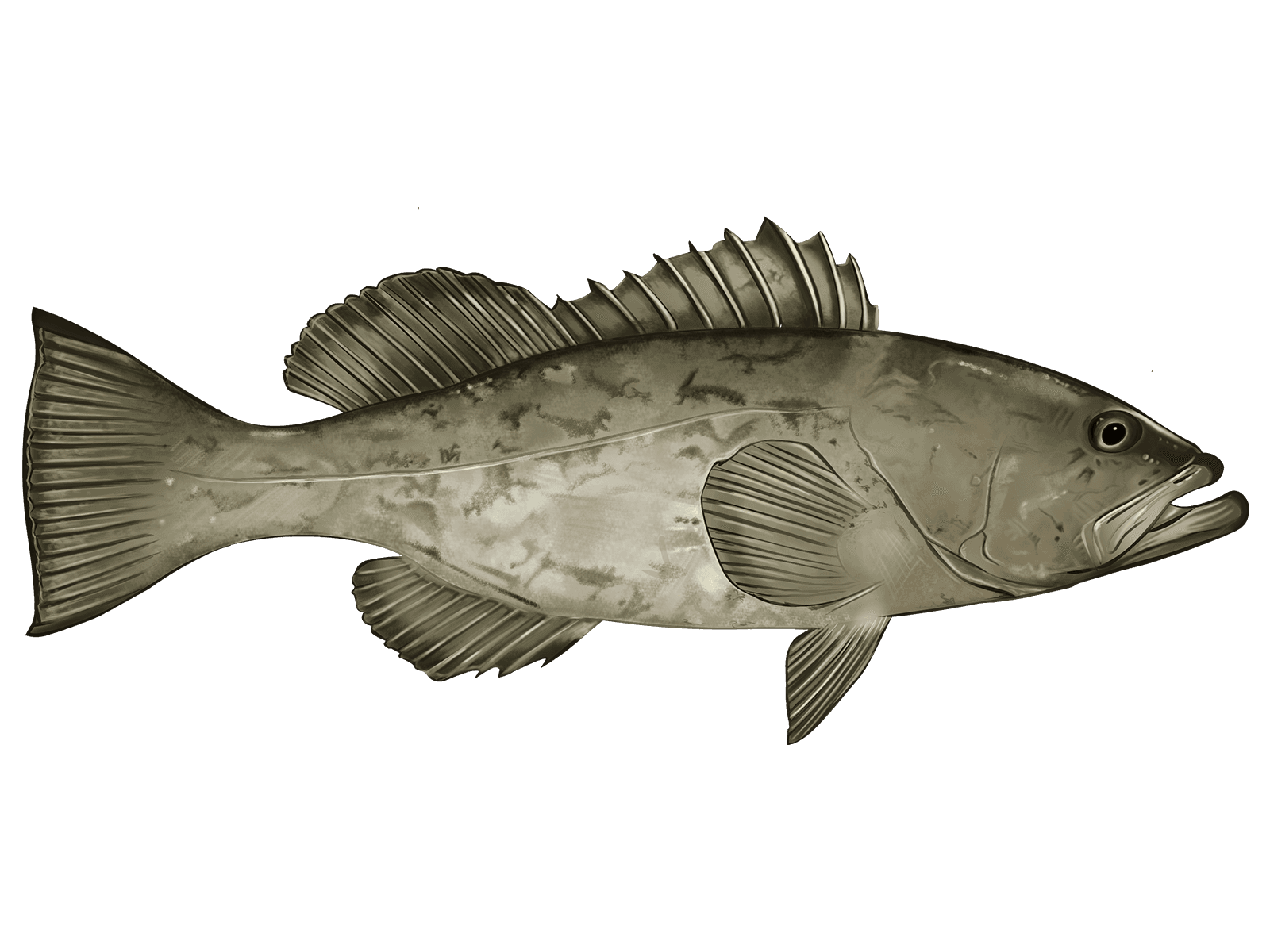
Gag Grouper
Gag Grouper (Mycteroperca Microlepis) Fish Description
The Gag Grouper appears to be one of the less aesthetically appealing fish among the Groupers. Some even describe the Gag Grouper as “drab” in appearance. Its fins are mostly composed are rays and have a laterally-compressed oblong body. However, it does have a similarity to the Black Grouper: it’s the box-shaped black spots on the back. Their dorsal fins have 11 spines mixed with 16-18 rays while their anal fins have 3 spins with a mix of 10-12 rays.
Female Gag Groupers are normally pale or medium grey in color. Their bodies have a more marbled appearance due to the wavy patterns covering their bodies. But the best way to tell a female and a male apart is through the dorsal fin. Unlike female Gag Groupers, a male Gag Grouper’s dorsal fin is reticulated. Color-wise however, they are also darker than female Gag Groupers. Their bellies and breast are usually dark gray, almost black.
Gag Grouper Diet and Size
Depending on their size, a Gag Grouper’s diet changes. Though, Gag Groupers are seen to prefer a variety of crustaceans such as crab and shrimp. They do like some fish and sometimes, an occasional squid.
An average Gag Grouper is 20 inches (50 cm) long. However, some have reported seeing a Gag Grouper reach 145 cm (57 inches) in length and weigh 36.5 kg (80 lbs).
Interesting Facts about the Gag Grouper
- Gag Groupers, when they mature, change sex from female to male.
- When they’re young, all Gag Groupers start out as females.
- However, Gag Groupers are more commonly female.
- Gag Groupers grow slowly. It usually takes them5-6 years to sexually mature.
- Juvenile Gag Groupers have a different habitat preference to adult Gag Groupers.
- Its scientific name microlepis means small scales in Latin.
- Gag Groupers can live up to 30 years.
- Red Tide can heavily affect Gag Grouper populations.
Gag Grouper – Fishing Techniques: How to Fish for a Gag Grouper
The first thing to look for is a place that can serve as shelter. Gag Groupers like hiding so, they would make use of any structure that can serve as shelter. Young Gag Groupers prefer staying inshore and in shoals until they mature. Older Gag Groupers loiter around offshore reefs and shipwrecks. Usually, when fishing for Gag Groupers, they are usually accompanied by Kingfish and Spanish Mackerel. At times, they’re also accompanied by Blacktip and Spinner Sharks. They’re found chasing herrings that swarm near the beach.
Others advise looking for stone crab traps. Since Gag Groupers love crab, they’ll most likely go to a place where crabs hide.
When it comes to bait choice, Gag Groupers love live bait. They prefer mullet and pinfish. However, some anglers have reported having success with also cut bait like octopus, squid, and crabs. Other options include using Pilchards, Cigar Minnows, and Grunts.
For your equipment, it depends on where you are. In Florida, you’re required to use a circle hook when going bottom fishing. But some say that the standard equipment will do. Standard rod with a 40-pound line works but people have done well even with a 20-30 one. Make sure that your bait is hooked on well but with the barb still sticking out.
When going for the Gag Grouper, be prepared to wrestle with it. Once they snag your bait, they’ll want nothing but to drag their food back to the depths where they came from. They’ll try to run against the rocks to make sure they don’t get fished out. To avoid that, make sure the reel’s locked and don’t let it freewheel otherwise it’ll give them a chance to dive into a hole. To make it easier, some people advise keeping your rod low so it’s easier to just yank them out of the water.
Gag Grouper Habitat and Distribution
Gag Groupers like staying in coastal waters with a lot of rocky structures. Some of their preferred rocky structures include rocky bottoms and reefs. They also like loitering near drop-off walls in the deep waters. But the younger Gag Groupers like staying more in the seabed.
Goliath Grouper
Goliath Grouper
Fish Description
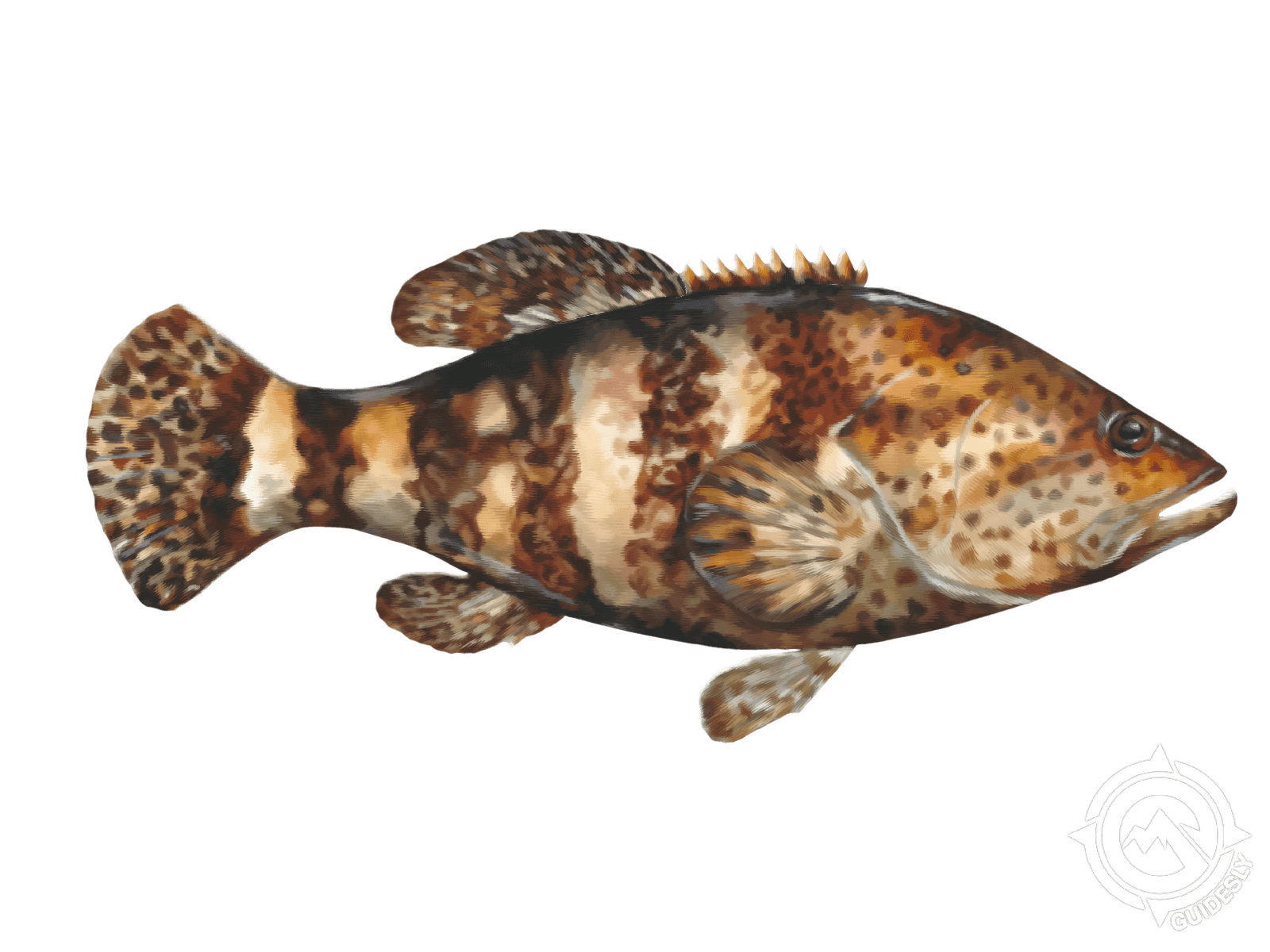
As the name implies, this is a gigantic species of Grouper. As the biggest Grouper in the western Atlantic, they are stocky in shape, have tiny eyes and broadheads. Their pectoral and tail fins are connected along the back. They can live in brackish water and tolerate low oxygen levels.
They can grow to 8 feet in length and weigh up to 800 pounds.
Atlantic Goliath Grouper vs. Pacific Goliath Grouper
At one time, it was thought the Atlantic and Pacific Goliath Groupers were the same species, and centuries ago, they were the same species. They are now considered sister species. There are a few distinguishing marks between the two. The Pacific Goliath Grouper has primarily dark grey coloration, which is punctuated by small, white spots and blotches, and many times yellow accenting their fins. The Atlantic Goliath Grouper is mottled tan and grey. The Atlantic Grouper is also larger than the Pacific species.
Interesting Fish Facts
Adult Goliath Groupers gather together in spawning groups as soon as they prepared to mate. The groups vary in size, number, and location. Once they are together, the females lay eggs. Once the males fertilize the eggs, they rise to the surface of the water. The eggs then drift with the ocean currents for about 40 to 60 days, reaching the nursery areas as the baby groupers hatch out. These tiny groupers swim to the bottom of the ocean and hide in sea mangroves and grasses until they grow larger.
They may experience a sex reversal with age. All young groupers are female, but as they grow older, some become male. Only small percentages remain out of maturity long enough to become males, thus ensuring that most groupers are egg-laying females.
In addition to its potentially large size, an extra defense that some Groupers have is the ability to change their skin color. At times the color change is as simple as changing from dark to light to mix in with different light levels. Other Groupers have developed colorful patterns consisting of stripes, blotches, or spots that help them blend with the ocean floor and reef bottom.
Goliath Groupers are known to live 35 years, but now some scientists estimate the lifespan for these mammoth fish is 50 - 100 years.
Divers beware! These groupers are known to stalk divers.

Habitat & Distribution
Juveniles live and survive in canals, brackish estuaries, and mangrove swamps. When they mature, they move to shallow, tropical waters among coral or artificial reefs. Notably, they are one of the few groupers found in brackish water.
Goliath Grouper are loners. There are limited home ranges; these fish can be alone. They are primarily found in shallow, tropical waters in man-made and natural structures especially coral reefs. In the eastern Atlantic Ocean, they navigate yearly to a spawning area for breeding; the location and season vary according to the population.

The Goliath Grouper's population is concentrated in the Gulf of Mexico and the Florida Keys. Occasionally, they are found as far north as New England on the coast of Massachusetts and Maine.
They are also found in the Caribbean and parts of South America.
Bait and Lures
Goliath Groupers feed on sea turtles and crustaceans, mostly crabs. Other slow-moving fish such as burrfish, catfish, toadfish, and octopus will be found in their diet. These would be good fish to use as bait along with ladyfish and crevalle jack. Lures would be unsuccessful with these huge fish.
Fishing Techniques - How to Catch Goliath Grouper
The rod and reel you use need to be strong and extra-heavy since these fish are known to break gear. Goliath Grouper puts up an intense but usually short-lived fight. That first pull will be enough to pull you right off the boat if you are not careful, so be prepared. You will want a very heavy rod.
Considering the shallow water depth and size of this fish, we suggest a 50-80 wide reel. It should be sufficient to accommodate the 400 - 600 pound monofilament fishing line you will need. And as these fish live near rocks, reefs, and structures, you will need a line with some stretch. A 600-pound test monofilament fishing line is abrasion-resistant and will give you what you need. We also recommend a 20/O circle hook, big enough to get around the massive jaws of this fish.
The key to Grouper fishing is anchoring close enough to the reef so you can get the fish will come out to take the bait, but also distant enough to have a chance to pull them away from the reef before they try to get back and break you off. One important tip when fishing is to bounce the bait off the bottom to create some commotion. They have no predators, and they are not shy.
Is Goliath Grouper Good to Eat?
Goliath Grouper is known for its unique taste, which is unlike any other fish you’ve ever tried. It has a delicate white flesh that is mild, yet subtly sweet, making it a versatile ingredient that can be used in various recipes. The flavor profile of Goliath Grouper is exceptional, and it can easily soak up whatever seasoning or cooking techniques you choose to use, allowing you to create a dish that is personalized to your liking. Whether you prefer it grilled or baked, this fish will leave your taste buds longing for more. Its distinct flavor and texture make it a popular choice for seafood lovers who want to explore different tastes and experiences. So next time you’re looking for something different and exciting to try, consider the Goliath Grouper, and get ready to be pleasantly surprised!
Goliath Grouper Population
A dangerous combination of factors going against the Goliath is that they are sluggish fish that are slow to grow and reproduce. Secondly, considering their large size, they are found in relatively shallow waters of around 150 feet. These are a dangerous combination. They have experienced an estimated 80% population reduction because of overfishing. Because of this, all harvest of Goliath Groupers is forbidden by law.
Remember, these amazing fish are protected, and we all should be doing our part. Adhere to the rules of catch and release and leave these fish unharmed.
World Record
The world record for a hook-and-line caught Goliath Grouper is 680 pounds caught off Fernandina Beach, Florida, in 1961.
Great Barracuda
Great Barracuda (Sphyraena barracuda) Fish Description
The Great Barracuda (Sphyraena barracuda) is one of the well-known apex predators in the ocean. In fact, because of their large size, blinding speed, and tenacious behavior, this fish doesn’t have that many predators except for sharks and dolphins. There were also some documented attacks on humans, including a couple of deaths that happened a few decades back off the coast of Key West and North Carolina. But even though it happens quite rarely, the mere fact that there have been deaths attributed to them makes the Great Barracuda one of the most feared fishes in the ocean.
The Great Barracuda, as the name implies, is quite big, often reaching five to six feet in length. Aside from its size, it’s also a well-known speedster of the sea thanks to their long, tubular body and pointed snout that allows it to swim fast with top speeds reaching thirty-five miles per hour in short bursts. With its size, strength, and speed—not to mention it’s equipped with a large mouth containing two sets of razor sharp teeth—the Great Barracuda is an extremely successful predator. It also swims in groups during a hunt, often circling and trapping preys swimming in schools. It mostly feeds on herrings, sardines, and small tunas; but can also eat shrimps, octopi, and other marine animals given the opportunity. A mature barracuda also can blend well with the shimmery open waters because of its gray, silvery color, which they use to either ambush prey or to protect themselves from other predators.
Interesting Facts About Great Barracudas
- Great Barracudas can grow as much as six feet long and can weigh up to one hundred three pounds.
- They could swim at blinding speeds of up to thirty-five miles per hour
- Great Barracudas don’t have many predators except sharks and dolphins.
- They can live up to fourteen years in the wild.
- They hunt mainly by sight and are naturally inquisitive.
- They hunt in small groups, often trapping their prey as they swim in circles.
- They often approach divers and snorkelers not to attack but either to check for food or they were attracted by the shiny object the diver might be carrying or wearing.
- Despite its fearsome reputation, Great Barracudas rarely attacks humans.
- The last recorded death due to barracuda attack was off Key West and North Carolina that happened way back in 1947 and 1957 respectively.
- Attacks are said to be easily prevented with a few simple precautions.
- The Great Barracuda is a popular gamefish not because of its meat—which is rarely eaten due to some cases of food poisoning—but because anglers find catching them quite challenging.
Great Barracuda Size and Swimming Speed
Because of their slender, streamline body, the Great Barracuda can swim fast, with some recorded to swim as fast as thirty-five miles per hour. They can also grow huge, with some reaching up to six feet long; although average size tends to be between two to four feet.
Great Barracuda Habitat and Distribution
The Great Barracuda can pretty much be found anywhere in the world, with most occurring near shore in tropical and subtropical seas, but rarely in the eastern Pacific Ocean. In the US, you can find it along the coasts of our eastern seaboard—from as far up north as Massachusetts down to the Gulf of Mexico and the Keys.
Great Barracudas are also found near the surface of the water, especially the mature ones. Although they mostly tend to swim nearshore in coral reefs, seagrasses, and mangroves, they can sometimes wander to the deeper parts of the open ocean, often in search of food. They are also mostly found swimming alone, except when aggregate during spawning season (which is said to happen during the spring) or when they form a hunting group.
Great Barracuda Fishing Tips
Finding and hooking a Great Barracuda are not that hard given their widespread distribution as well as their veracious eating behavior. The fun begins when you hook one as it’s known to be a rather tenacious fighter, although it’s known to have a very limited stamina. If you’re lucky enough to hook a large one, you should also watch out for its last attempt to fight for survival as huge ones are known to jump and would even attempt to bite, which, as you could imagine, can do serious damage if those razor sharp teeth come in contact to your bare skin. So we highly suggest using a landing net and gloves.
Red Grouper
Red Grouper (Epinephelus morio) Fish Description
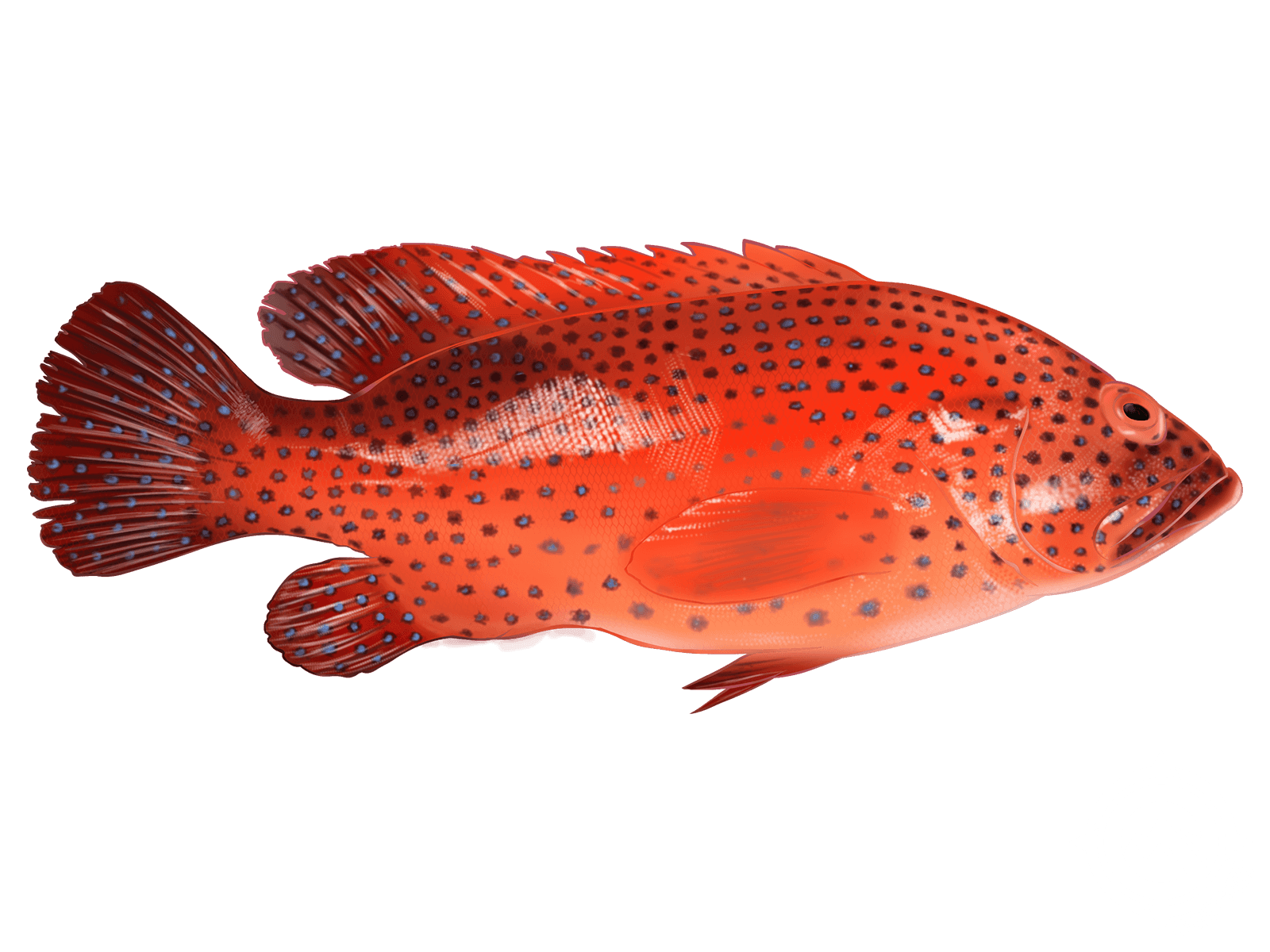
As the name suggests, the Red Grouper (Epinephelus morio) can easily be distinguished from other groupers by the mostly rusty red coloration of its body. While its head and upper parts tend to be darker, the color gradually lightens until it reaches the rather light red to pinkish hue of the belly. It also has some sort of blotches on its side and some distinctive white spots on its body—from the head right across to the base of its tail. And although the fins sometimes have the same coloration as its body, they usually have some sort of a black margin that runs right around the edges.
The body of the Red Grouper is known to be robust and meaty even though it’s mostly moderate in size. It has a large mouth which allows them to eat its prey whole. Its lower jaw protrudes a little bit beyond the upper jaw, both of which are equipped with several sets of razor sharp teeth that the fish uses to prevent its prey from escaping, not to rip its flesh apart. Its prey mostly consists of marine invertebrates including octopi, shrimps, and crabs, but from time to time will also eat smaller fishes.
The Red Grouper is a protogynous hermaphrodite fish. This means that all of them are females at the very beginning of their life. Many would, however, change to males as soon as they hit their sexual maturity, which is between seven and fourteen years of age. When the spawning season comes which usually occurs between January and April, both the males and the females would release their sperms and eggs in the water. The fertilized eggs would just drift with the currents until they hatch into larvae in about thirty hours. The larvae would just then live among the zooplanktons near the surface of the water. As they reach their juvenile stage, they would swim down to the bottom of the water and settle within seagrass beds where they would prey on smaller fishers and different marine invertebrates until they reach their full maturity.
Interesting Facts About Red Groupers
- The Red Grouper can grow up to four feet long and can weigh around a little more than fifty pounds.
- The biggest Red Grouper caught on record was a forty-two pounder caught off the coast of St. Augustine, Florida in 1997.
- Red Groupers have long lifespans with some reaching up to twenty-nine years of age.
- It is a protogynous hermaphrodite, which means they are all born females.
- Many would change to male as they hit sexual maturity.
- About 70% of groupers harvested in U.S. waters are Red Groupers.
- Its meat is highly regarded for its moist, firm, and flaky consistency.
- It is said to be one of the best tasting groupers because of its shellfish-like taste.
- Red Grouper meat is sold either fresh or frozen as a whole a fish, as steaks, or filleted.
- Red Grouper meat is susceptible to red tide due to its shellfish diet.
- Red Groupers are known to be one of the top predators in reefs, making them an essential part of the reef’s ecological balance.
- Red Groupers are often preyed upon by other known reef apex predators, including barracudas, moray eels, and different species of sharks.
- They are targeted by both commercial and recreational fishers.
- Although their population status hasn’t reached the “critical” levels yet, there were recorded declines in their populations in some parts of the Gulf of Mexico due to overfishing.
- Another reason for the decline is the huge number of juveniles that are accidentally caught by shrimp trawlers.
- Catch limitations for commercial and recreational fishers are placed by the authorities to help with the fish species’ population recovery.
- Commercial and recreational fishing seasons are also closed from January to April—the Red Grouper’s spawning season.
Red Grouper Average Size and Swimming Speed
Although there were some reported sightings of a Red Grouper reaching a whopping fifty pounds in weight, average weights tend to be a lot smaller of about five to ten pounds. Most also don’t grow too long as average length rarely hits the two feet mark. As for the speed, Red Groupers don’t swim that fast although they can swim much faster in short bursts to help them escape predators.
Red Grouper Habitat and Distribution
The Red Grouper is not a migratory fish and can often be found near our eastern seaboard—from as far north as Massachusetts down to Florida and into the Gulf of Mexico. It can also be found abroad as far south as the Caribbean Sea up to southern Brazil.
This fish primarily prefers muddy and rocky bottom underwater habitats at depths of 16 to 1,083 feet. It can also be seen swimming or resting close inshore, especially in reefs, ledges, and wrecks of up to 300 deep, with many anglers catching these tasty fish in about 10 to 100 feet.
Red Grouper Fishing Tips
Although you can pretty much catch a Red Grouper using a light tackle, you better be ready for a somewhat long battle with this fish as it’s known to be one of the toughest fighters out there. Hooking one wouldn’t be much of a problem as it’s a pretty aggressive predator that is always ready to strike on every opportunity of a meal, especially if you use its favorite diet as baits such as shrimp and crab.
Tripletail
Tripletail (Lobotes surinamensis) Description
The Tripletail or commonly known as the Atlantic Triple Tail is a medium-sized saltwater game fish. It has an olive color mixed with dark or white blotches. It has a large, round-like, body with small eyes. Its caudal fin has a round shape and both its anal and rear dorsal fin have a round shape that extends toward the back. The appearance of the rear dorsal fin and anal fin has the same shape as the caudal fin, hence the name triple tail.
Size and Diet
The tripletail can get as big as 3 feet long and weigh as heavy as 40.8 lbs. On average, they are only 18 inches long and weigh between 2 to 13 lbs. The tripletail is an opportunistic carnivorous fish. They are known to eat shrimps, crabs, and baitfish.
Interesting Facts About the Tripletail
- The tripletail has the ability to change its color from a mix of white and black to either black or white.
- Triple trails rapidly grow from their first year alone. It is believed to be an adaptation to quickly outgrow and protect themselves from predators.
- If you catch one a tripletail, be careful when handling one and avoid holding around the gills. Their gills are razor sharp.
- Juvenile triple tails mostly have mottled black, brown, and white coloration
- The tripletail is also known for having a firm and tasty meat, some anglers claim the taste is close to that of a Red Snapper or Grouper.
- One of the defense mechanisms of the triple trail is to lie on its sides to mimic floating weeds or any materials near them.
Tripletail Fishing Techniques
The tripletail is slowly becoming a popular game fish in the fly fishing world. For their bulky bodies, they are quite acrobatic. To catch a tripletail, the best method to catch them is by sight casting. They usually swim near the surface, making it easy to sight cast. Anglers often target weed lines to find them. Once you spot one, be stealthy when catching a tripletail. You can easily spook them, so cast away from the spot and drag your line towards them and let them ambush your bait.
Here are the recommended gears of anglers so you can fly some triple tail – use a rod between 7 to 9 foot 8wt fly rod with 20 lbs test. As this fish swims near the surface, the best lines to use are floating lines. Use hook sizes from #2 up to 1/0.
The best baits to use for triple tails crabs, shrimps, sardines, and minnows. For the lures, you can use squid, shrimp, or crab flies.
Habitat and Distribution of Tripletail
The tripletail is found in the tropical and subtropical waters of oceans around the world. They prefer water temperatures above 69.8F. In the western Atlantic, their range is from Massachusetts to Argentina. The season for the tripletail is the whole year-round. Their spawning season occurs in summer and it peaks from July to August. They mainly spawn in inshore and nearshore water, but some have been found spawning offshore. You can find them in depths from near-surface up to 210 feet.
They are solitary fish but can sometimes be seen in small schools. The tripletail makes small north and south migrations from April to October. To find this fish, check shorelines and gulfs for juveniles that are about 1 foot long. Adults are mainly found in offshore waters and bays. The tripletail is a saltwater fish but some have been found in estuaries and mouths of rivers. The best fishing spots for the triple tail are in Massachusetts, Florida, Mississippi, and Texas.
About the Mako (Center console)
%2F%2Fusers%2F07790dff-4fa1-43da-bee2-288bda18ca2c%2Fvehicle_picture%2F355129024_582862717300903_1746104862341624084_n.jpg&w=1920&q=75)
Vehicle Guest Capacity: 6
Manufacturer Name: Yamaha
Maximum Cruising Speed: 38
Number of Engines: 2
Horsepower per Engine: 200